
Last updated: November 14, 2026 · 13 min read
It all comes down to how much medical coverage you want versus how much you can afford to pay each month. For most people in 2026, I’d say the best cat insurance for broad coverage is ASPCA Pet Health Insurance, and the best for being affordable and having flexible options for younger cats is Lemonade.
Coverage Snapshot
- The best pet insurance for cats in 2026 depends on specific needs, with ASPCA often cited for comprehensive coverage including hereditary conditions and no age limits, while Lemonade is noted for affordable all-around policies with flexible deductibles.
- It depends on: The cat's age and breed (hereditary risks), the owner's budget for monthly premiums versus deductibles, and whether they want wellness coverage included.
- A common misconception: Many people think all pet insurance plans cover pre-existing conditions from day one; in fact, most plans exclude them, though some like ASPCA may cover curable conditions after 180 days without symptoms.
In this article (7)
- The Verdict: Best Pet Insurance for Cats in 2026
- Who cat insurance is for (and who it’s not)
- ASPCA Pet Health Insurance: Best overall
- Lemonade and Spot: Best for affordability and flexible deductibles
- Fetch and MetLife: Dental, behavioral, and multiple cats
- The bottom line: Pick a plan that fits your cat’s health story
- Best Pet Insurance for Cats 2026 FAQs
The Verdict: Best Pet Insurance for Cats in 2026
ASPCA is my top pick because its policies cover the kinds of health issues that tend to rack up the vet bill for cats. Its Complete Coverage plan covers vet exam fees, hereditary and congenital conditions, dental diseases, behavioral conditions, and even alternative therapies (CBS News). That’s important because cats often don’t show signs of being in pain until they’re far along in an ailment, and many of the more common cat ailments (like kidney disease or cardiomyopathy) fall into categories that less expensive plans don’t cover.
Plus, ASPCA might cover some curable pre-existing conditions after 180 days without symptoms or treatment (CBS News), which is a big deal because most insurers will forever exclude any health problem your cat had in the past. The company also has no upper age limit for signing up (CBS News), so you can get an older rescue cat insured who might otherwise be impossible to insure.
Lemonade works differently, with a focus on lower upfront costs and ease of use online. While its basic plans might not have as exhaustive a list of inclusions as ASPCA’s top plan, it’s still a solid option for anyone who wants to keep their fixed costs low. And that’s where the math comes in. The average yearly cost for accident and illness cat insurance is said to be $435 (NerdWallet), but if you add on wellness coverage, that jumps to $859 (NerdWallet). If you skip the routine care, you save big, but then you’ve got to be ready to pay for vaccines and check-ups out of pocket.
Let’s say you’re in one of two situations. You’re a first-time cat owner with a healthy kitten, and you might go with Lemonade’s lower premiums and fast claims, willing to pay more out of pocket for small incidents in exchange for lower monthly payments. But if you have an older Maine Coon (a breed prone to hereditary heart problems), you’d probably get more out of ASPCA’s explicit coverage of hereditary conditions and higher reimbursement limits, even if the premium is higher. In the end, the “best” policy is the one that matches your cat’s breed-related risks and how much you’re comfortable paying in deductibles.
Before you commit, take a look at the current policy language for any waiting periods (usually 14 days for accidents and illnesses) (NerdWallet). Also, remember that most plans have a limit on how much they’ll pay each year, although some do offer unlimited plans (NerdWallet). It’s better to know that ahead of time if you need to make a big claim.
| Option | Price | Key detail | Source |
|---|---|---|---|
| Lemonade Pet Insurance | $90 every month | $100, $250, $500, $750, or $1,000 | lemonade.com |
Who cat insurance is for (and who it’s not)
Cat insurance is a safety net, not a piggy bank. It makes sense for owners who couldn’t easily cover a substantial vet bill on a whim but still want protection if things go badly. If you’ve got plenty of emergency savings, you might be better off self-insuring and putting the premium to work somewhere else. It comes down to weighing the known cost of premiums against the unknown cost of getting sick.
It’s said that the average yearly cost for accident and illness pet insurance for cats is $435 (NerdWallet). If you throw in routine wellness care like vaccinations and dental cleanings, that jumps to reportedly $859 a year (NerdWallet). Those are averages that hide a lot of variation depending on your cat’s age, breed, and where you live, but they’re a starting point for figuring out if it’s worth it. A younger, healthier cat costs less to insure than a senior cat with known health issues, so your actual premium could be quite a bit different from the national averages.
If you’re only worried about catastrophic events, accident-only plans are a cheaper option. The average accident-only pet insurance premium for cats in 2024 was reportedly $9.17 a month, according to NAPHIA (Progressive). That’s cheap enough that almost anyone can afford it, but it doesn’t cover illnesses, which make up the bulk of costly vet claims for older cats. If your cat is prone to urinary blockages or kidney disease, an accident-only plan won’t protect you much.
Good fit if
- Owners who don’t have $1,000+ in emergency savings
- Owners of breeds prone to hereditary conditions
- Owners who can’t predict or absorb a sudden vet bill
Skip it if
- Owners with strong emergency funds who’d rather self-insure
- Owners who want coverage for known pre-existing conditions
- Owners who just need routine care and can pay cash
You can skip full-coverage insurance if you have a set-aside emergency fund that’s bigger than most treatments would cost. Paying a monthly premium plus a deductible and co-pay can end up costing more over five years than paying for one big surgery out of pocket. But if one diagnosis would have you choosing between treatment and rent, insurance shifts that risk to the insurance company. And that really means this: You’re paying a small, certain amount to avoid a big, uncertain loss.
Be careful if you’re hoping for coverage for conditions your cat already has. Most policies exclude pre-existing conditions altogether, so insurance isn’t a way to cover ongoing chronic conditions unless it’s specifically set up to cover curable recurrences. Check the policy language for exclusions before you assume a claim will be paid. If your cat has had diabetes or asthma before, read the fine print to see if future flare-ups are covered or if the condition is permanently excluded.
ASPCA Pet Health Insurance: Best overall
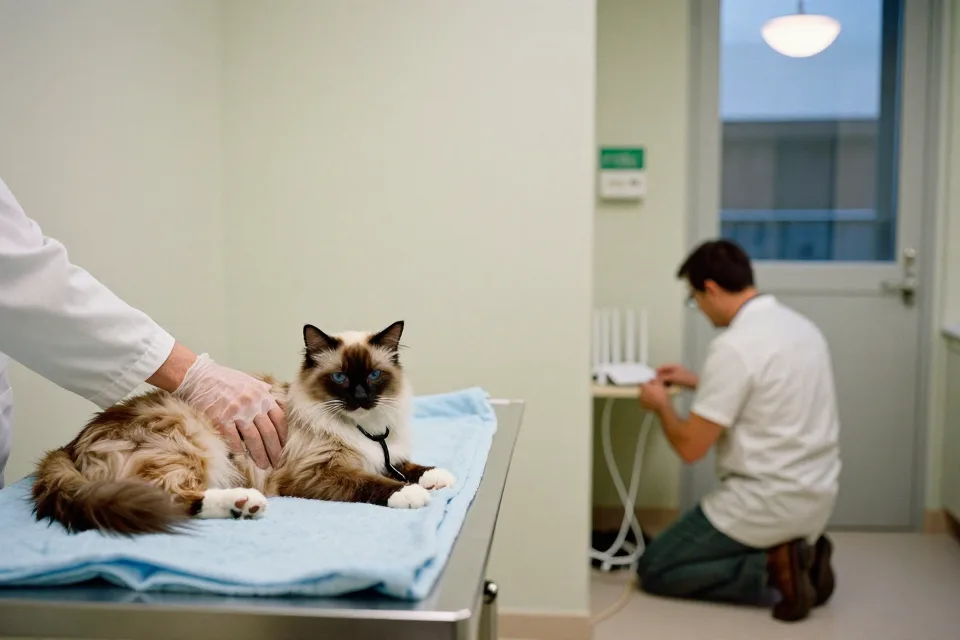
ASPCA takes the top spot as “best overall” because its policy language covers the specific areas that leave other cat owners in the lurch. That’s important because cats are experts at hiding pain, so conditions like kidney disease or cardiomyopathy can show up late and costly. Covering those categories means there’s less chance a big diagnosis ends up outside the scope of what you get reimbursed for.
Another big plus: there’s no upper age limit to get covered (CBS News). Most other companies won’t take on new policies for cats over eight or ten years old, which basically means they’re no longer insurable as they reach the age with the highest medical risks. With ASPCA, you can get them covered at any age, as long as they’re healthy when you do. That makes it the safest bet if you’re adopting an older rescue or wanting to insure a senior cat whose breed-related risks are already known.
The policy has a somewhat complicated stance on pre-existing conditions. It might cover some curable pre-existing conditions after 180 days of no symptoms or treatment (CBS News). That’s different from the outright permanent exclusions you see in many cheaper plans, and it leaves open the possibility of coverage for things like cleared-up infections or temporary injuries. For owners who want wide coverage without arbitrary age cutoffs, that’s the most complete safety net available in 2026.
Lemonade and Spot: Best for affordability and flexible deductibles
If what you want most is to keep monthly payments low while still having essential medical coverage, Lemonade and Spot have the most flexible structures on the market. Lemonade is notable for its simple pricing and digital-first claims process, and Spot lets you pick and choose coverage layers based on your budget. Both companies understand that cat owners don’t usually need the same plans, so they let you adjust the levers that determine how much you pay: the deductible, the reimbursement rate, and the maximum they’ll pay each year.
Lemonade’s model is all about simplicity and speed. You pick a deductible within a certain range, $100, $250, $500, $750 or $1,000 (lemonade.com), and that affects how much you pay each month. The higher the deductible, the less you pay each month, but then you have to pay more out of pocket before the insurance kicks in.
Most plans work on a co-insurance basis, which means the default setup is for the company to reimburse 80% of eligible costs once you’ve met the deductible, and you’re on the hook for the remaining 20% (lemonade.com). If you want to reduce that out-of-pocket cost even more, Lemonade offers a plan with 90% co-insurance, which costs around $90 a month as of November 2026 (lemonade.com). That’s a higher reimbursement rate, and it costs more because the insurer is on the hook for more of every claim.
Spot works in modules, so you can construct a plan piece by piece. You can go with accident-only coverage or add illness coverage, and you have the option to choose a reimbursement rate of 70%, 80% or 90%. A plan with a 90% reimbursement amount costs more than one that reimburses 70% of eligible vet costs (Progressive), so if you have the cash on hand to cover the difference, Spot lets you dial down the reimbursement amount to save on the premium. That’s handy for owners who want to make sure they’re covered in case of a catastrophic event but prefer to handle smaller bills themselves.
When you’re deciding between the two, think about how you deal with financial risk. Lemonade’s set tiers make it easy to see exactly what you’ll pay, while Spot’s granular controls mean you have to do the math to figure out the real cost of a claim. For instance, opting for a $1,000 deductible on either platform dramatically cuts your monthly premium, but it means you’re on the hook for more upfront costs in an emergency (lemonade.com).
If you think you’ll have lots of low-cost visits, a lower deductible combined with a lower reimbursement rate might even out. But if you’re insuring against infrequent, high-cost surgeries, a higher deductible paired with a high reimbursement rate usually makes the most sense.
I’d go with Lemonade if you want something quick and straightforward with clear pricing, especially if you’re okay with the standard 80% reimbursement. Go with Spot if you like fiddling with the knobs to find the exact premium amount that works for you, knowing that you’ll have to work out different scenarios to figure out how much you’d owe after a claim. Neither company covers pre-existing conditions, so make sure your cat is healthy when you sign up, or you could find yourself dealing with a denied claim down the road.
Fetch and MetLife: Dental, behavioral, and multiple cats
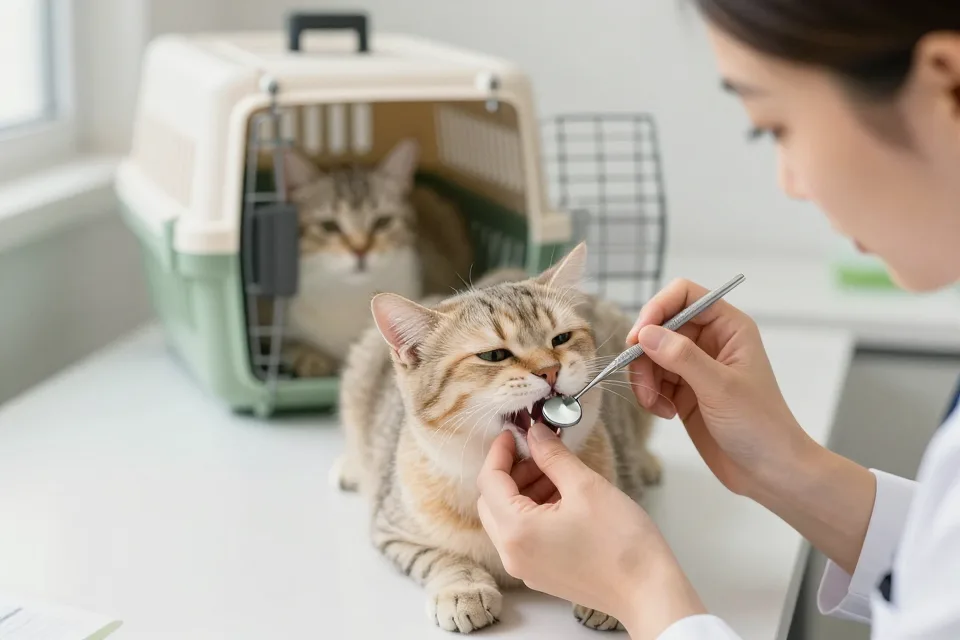
Typical medical plans tend to omit the two leading causes of repeat vet visits for cats: dental problems and behavioral issues. If your cat needs frequent cleanings or extractions, or therapy for anxiety, Fetch is a strong pick because it covers those services as part of its medical plan. Many other companies either exclude routine dental care altogether or restrict behavioral coverage, treating it more like an add-on than a necessary part of medical care. That difference matters a lot if you have a cat that’s prone to gingivitis or stress-related urinary issues, since the costs can add up fast over the lifetime of the animal.
If you insure several cats, MetLife and the others are worth pricing as a household: most insurers charge per animal, so work out the total for all of your cats, including any multi-pet discount, before you compare plans.
Imagine you have three cats and one of them has severe anxiety that requires behavioral therapy. A typical accident-only policy would reject those claims outright, meaning you’d have to pay for the medications and training sessions out of pocket. In that case, Fetch’s decision to include behavioral coverage as part of its medical plan makes it a smarter choice, even if the base premium might be a bit higher. If you’ve got multiple cats with different health needs, it comes down to whether you value MetLife’s well-known name and reliability more than the specific coverage limitations Fetch addresses with dental and behavioral care.
The bottom line: Pick a plan that fits your cat’s health story
The right cat insurance depends on your cat’s health journey, not just a list of rankings. If you’re insuring a senior cat or one with a history of curable problems, ASPCA makes sense because it has no age limits and lets you cover curable pre-existing conditions after they’ve been symptom-free for a while. That way, you avoid the trap of being unable to get insured just because your cat is older or had a minor illness in the past.
If you have a kitten or a healthy adult cat, Lemonade’s lower premiums and flexible deductibles often make more financial sense. You pay less each month and accept that you might have to pay for smaller bills yourself. But remember: if you add routine wellness care to any plan, the yearly cost goes up quite a bit, so think about whether you really need coverage for vaccines and check-ups or if you’d rather pay for those out of pocket.
If your cat has chronic dental disease or anxiety-related behaviours, Fetch’s inclusion of those services in its basic medical coverage saves you from the hefty out-of-pocket costs that typical plans exclude. Think about the owner of a ten-year-old Maine Coon with a history of urinary blockages. The Maine Coon is at high risk for recurring blockages and for hereditary issues. With ASPCA, both the recurring urinary problems and the possible heart conditions that can come with the breed are covered, whereas a more restrictive, cheaper policy might exclude them.
In the end, check the fine print for waiting periods and annual caps before you commit. The right policy isn’t necessarily the cheapest, it’s the one that accounts for your cat’s breed-related risks and whether you can afford an unexpected vet bill if things go wrong.
Best Pet Insurance for Cats 2026 FAQs
Is it based on diagnosis or symptoms for a pre-existing condition in cat insurance?
Most insurers consider anything that was a symptom, sign or diagnosis before the policy start date or waiting period, even if it wasn’t diagnosed, to be a pre-existing condition. That’s an important detail that’s often overlooked in basic comparisons. Check the policy wording to see if a condition is permanently excluded or if it can be considered curable, like ASPCA’s 180-day symptom-free rule.
Is a wellness add-on worth it for cats vs dogs?
Generally no, unless you have a cat with specific chronic management needs. Cats usually need fewer routine vet visits than dogs, which makes the set cost of wellness add-ons less financially feasible. Adding wellness coverage bumps the average yearly cost up from $435 to $859, so consider whether that increase makes sense given how much you’d expect to spend on routine care.
How do multi-cat household pricing models impact the overall cost?
Many insurers charge per animal, which can catch you off guard if you don’t carefully calculate the total cost for the whole household. Some do offer discounts, but the combined premiums for multiple cats can end up costing more than getting a single full-coverage policy elsewhere. Work out the total upfront cost, discounts rarely make up the difference for the full price of separate policies.
Is the exam fee covered by cat pet insurance?
Depends on the plan. Some full-coverage plans, like ASPCA’s Complete Coverage, explicitly include veterinary exam fees, while others might exclude them or require a separate add-on. Check the policy wording to see if 'vet visit fees' or 'exam fees' are listed under covered services to avoid any surprise out-of-pocket costs.
Does having to get an annual vet visit impact wellness coverage eligibility?
Yes, some insurers require you to show you’ve had an annual wellness exam in order to keep eligible for a wellness add-on or to maintain certain preventive care benefits. That can be a sneaky condition that impacts whether a claim gets paid. Check the policy wording to understand if skipping a routine check-up means you lose your wellness coverage for the next year.
Sources
- Best pet insurance for cats in 2026: Compare top companies – CBS News (CBS News)
- How Much Is Pet Insurance? 2026 Guide – NerdWallet (NerdWallet)
- Best Pet Insurance Companies for 2026 – NerdWallet (NerdWallet)
- How Much Does Pet Insurance Cost? Lemonade Guide (lemonade.com)
- How Much Is Pet Insurance: Average Costs | Progressive (Progressive)
This guide draws on 5 published sources, checked on November 13, 2026. We did not test the products ourselves.